Sewer Line Services in Gilbert
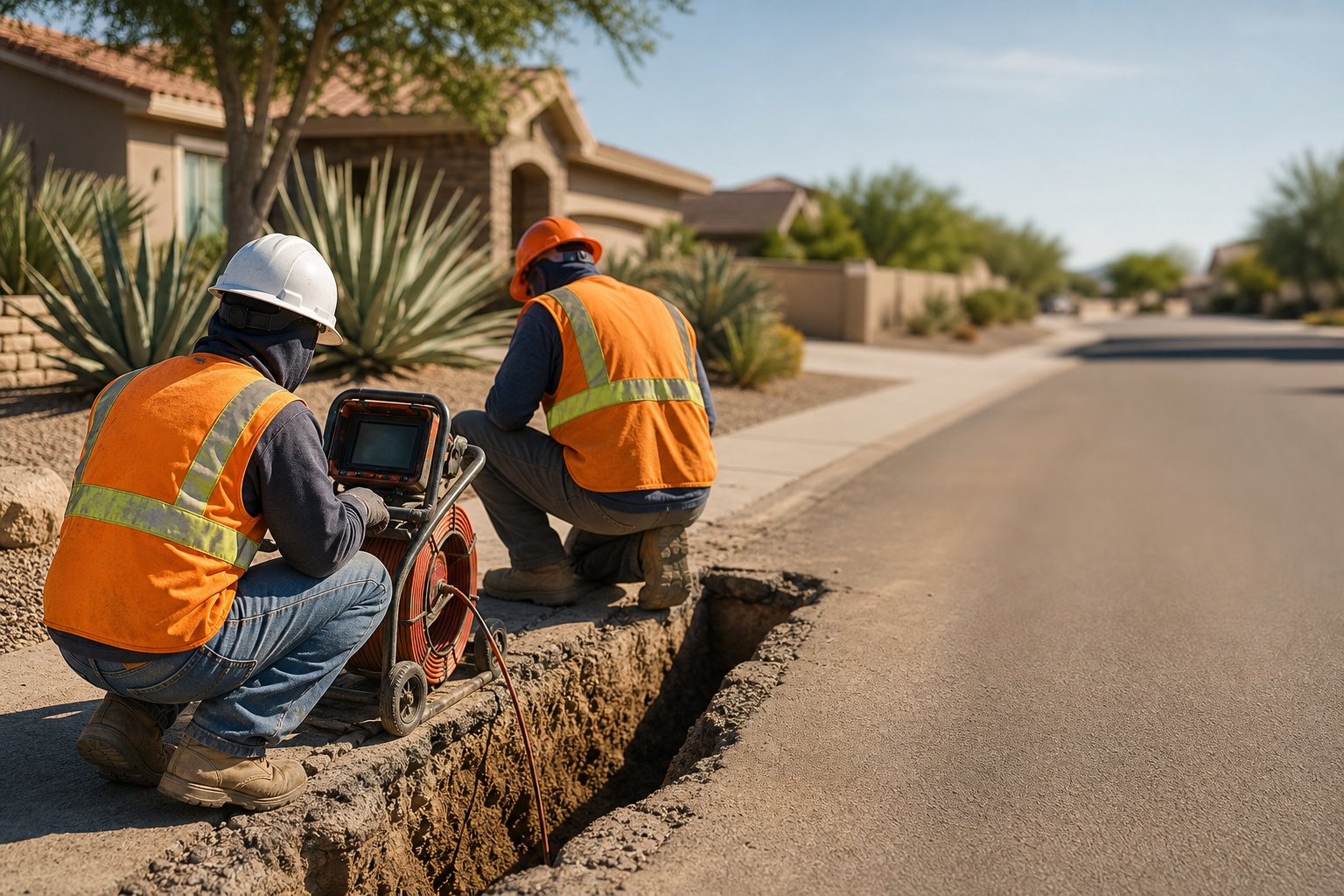
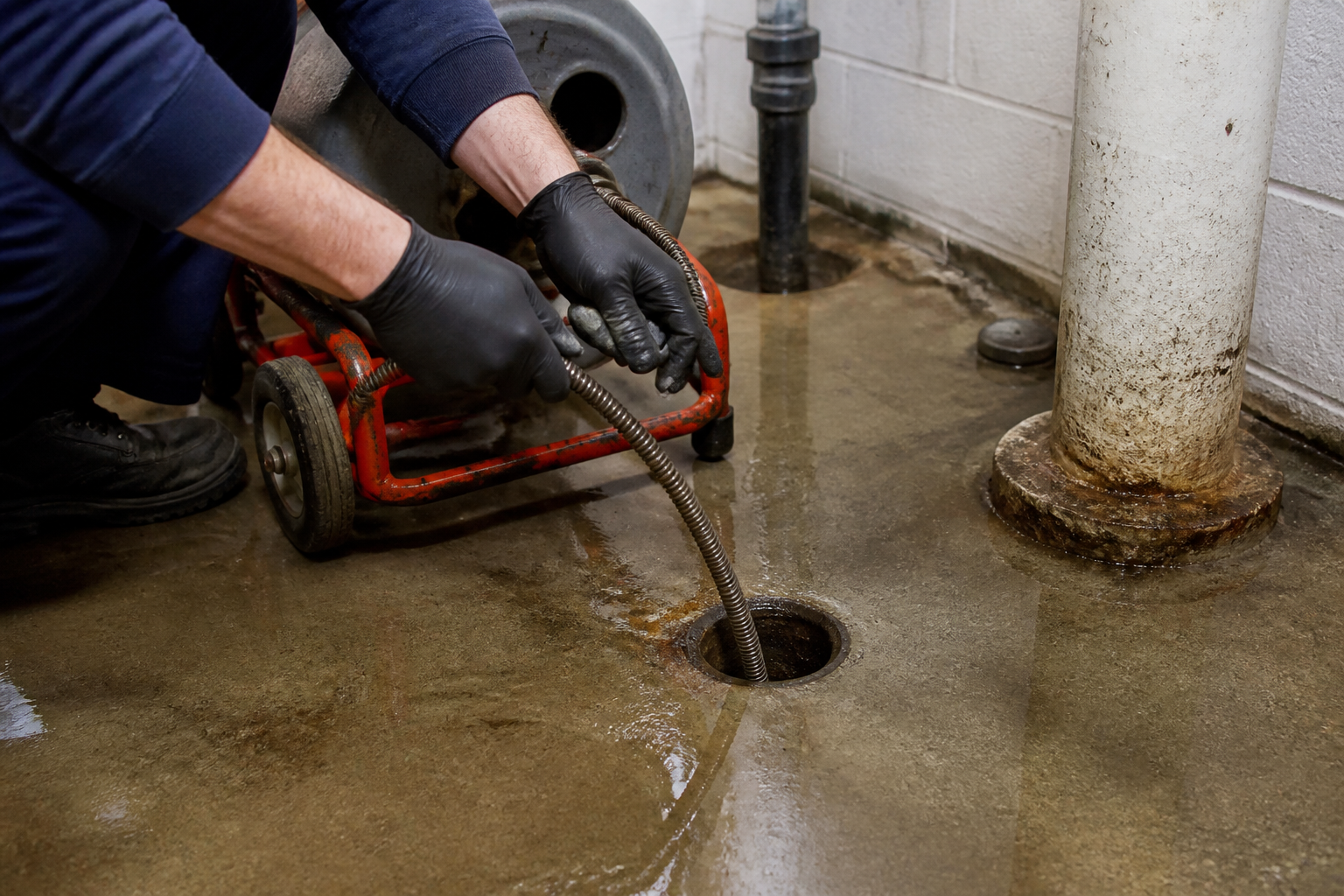
From a simple clog to a full replacement — we handle it all. Every job gets a camera inspection so you know what you're paying for.
Sewer Line Repair Done Right in Gilbert
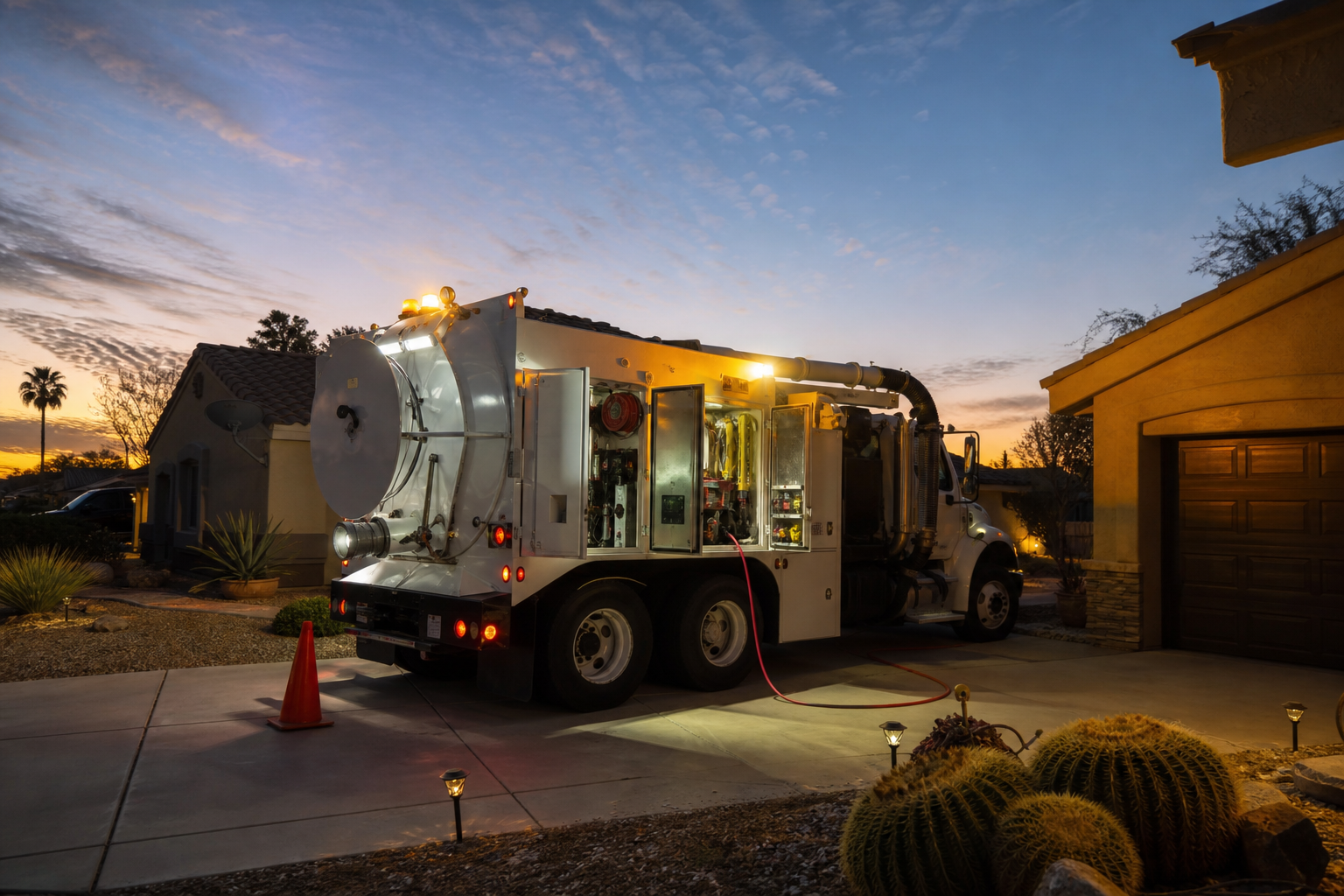
We're not a call center farming your job to a sub. When you call Gilbert Sewer Line Repair & Plumbing, you get our own crew — the same people who answer the phone, run the camera, and fix the pipe.
- ✓Upfront flat-rate pricing — you approve before we start
- ✓HD camera inspection on every single job
- ✓Trenchless methods — no unnecessary digging
- ✓Fast response across the East Valley
- ✓Our own crew, not a subcontractor
- ✓East Valley's trusted sewer repair specialists
How Our Sewer Repair Process Works
Three steps from broken to fixed.
Sewer Line Repair Across the East Valley
We're based in Gilbert and keep crews spread across the East Valley so response times stay fast. Most jobs in Gilbert, Chandler, Mesa, and Queen Creek get a technician out the same day — often within a couple of hours for active sewage emergencies. We cover residential and light commercial sewer repair from Tempe to Maricopa.
Serving: Gilbert · Chandler · Mesa · Tempe · Queen Creek · Maricopa · Ahwatukee · Scottsdale
View Full Service Coverage →Sewer Line Repair: A Complete Technical Guide
What's actually in the ground, why it fails, how we find the problem, and which repair method makes sense for your specific situation.
What Pipe Is in the Ground — and Why It Matters
The repair strategy depends almost entirely on pipe material and age. Gilbert's housing stock spans from 1970s tract homes to 2010s subdivisions, so you can find anything out there.
PVC (1980s–present)
Est. lifespan: 100+ years
Mostly root intrusion at joints. PVC itself rarely cracks under normal conditions — when it fails, it's usually a bad joint or a shifting soil load.
ABS (1970s–1990s)
Est. lifespan: 50–100 years
Similar to PVC but slightly more brittle. Check for delamination (inner wall peeling). Common in Gilbert homes built before 1985.
Cast Iron (pre-1975)
Est. lifespan: 50–75 years
Corrodes from the inside out. Gilbert's alkaline water accelerates pitting. By the time you see drainage problems, significant sections may already be channeled through.
Clay / Orangeburg (pre-1965)
Est. lifespan: 25–50 years
Orangeburg (compressed tar paper) goes soft and collapses. Clay cracks easily at joints. Both are highly susceptible to root intrusion. If your home is pre-1965, assume clay until proven otherwise.
The Six Most Common Sewer Line Failure Modes
Root Intrusion
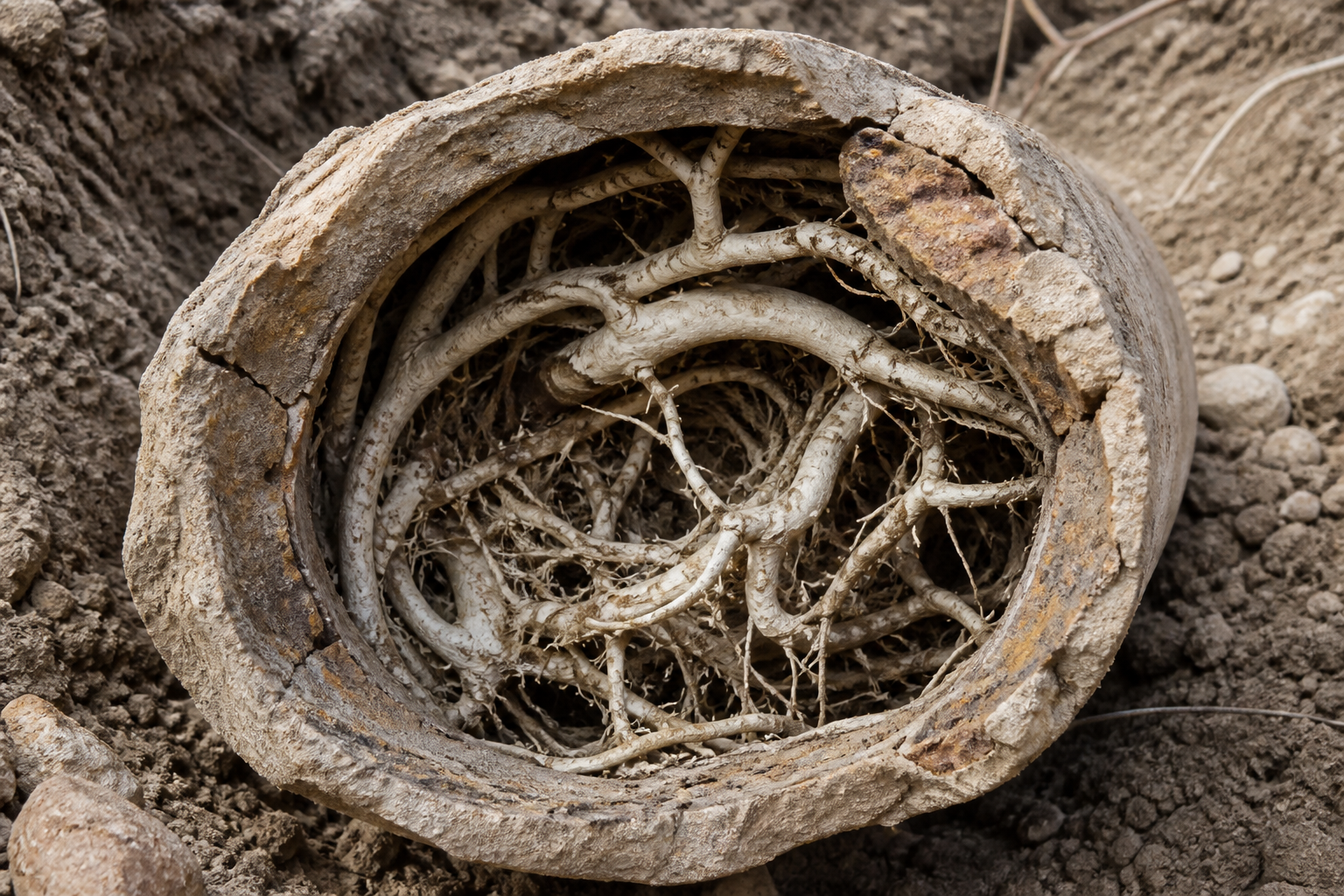
Tree roots follow moisture and enter pipe joints looking for water. Once inside, they expand and eventually crack the pipe from the inside. Mesquite and block walls (common in Gilbert yards) can accelerate this.
Bellying / Sag
A low spot in the pipe where water pools instead of flowing. Caused by soil settlement or improper bedding during original installation. Solids collect in the belly and create recurring blockages even after cleaning.
Offset Joints
Pipe sections shift laterally — usually from soil movement, heavy vehicle loads, or roots — and the ends no longer align. Creates a ledge that catches toilet paper and solids. Often misdiagnosed as a simple clog.
Channeling
Cast iron corrodes so that the bottom third of the pipe wears away into a trough or 'channel.' The pipe looks intact from outside but has almost no flow capacity. Only visible on camera.
Calcification / Grease Buildup
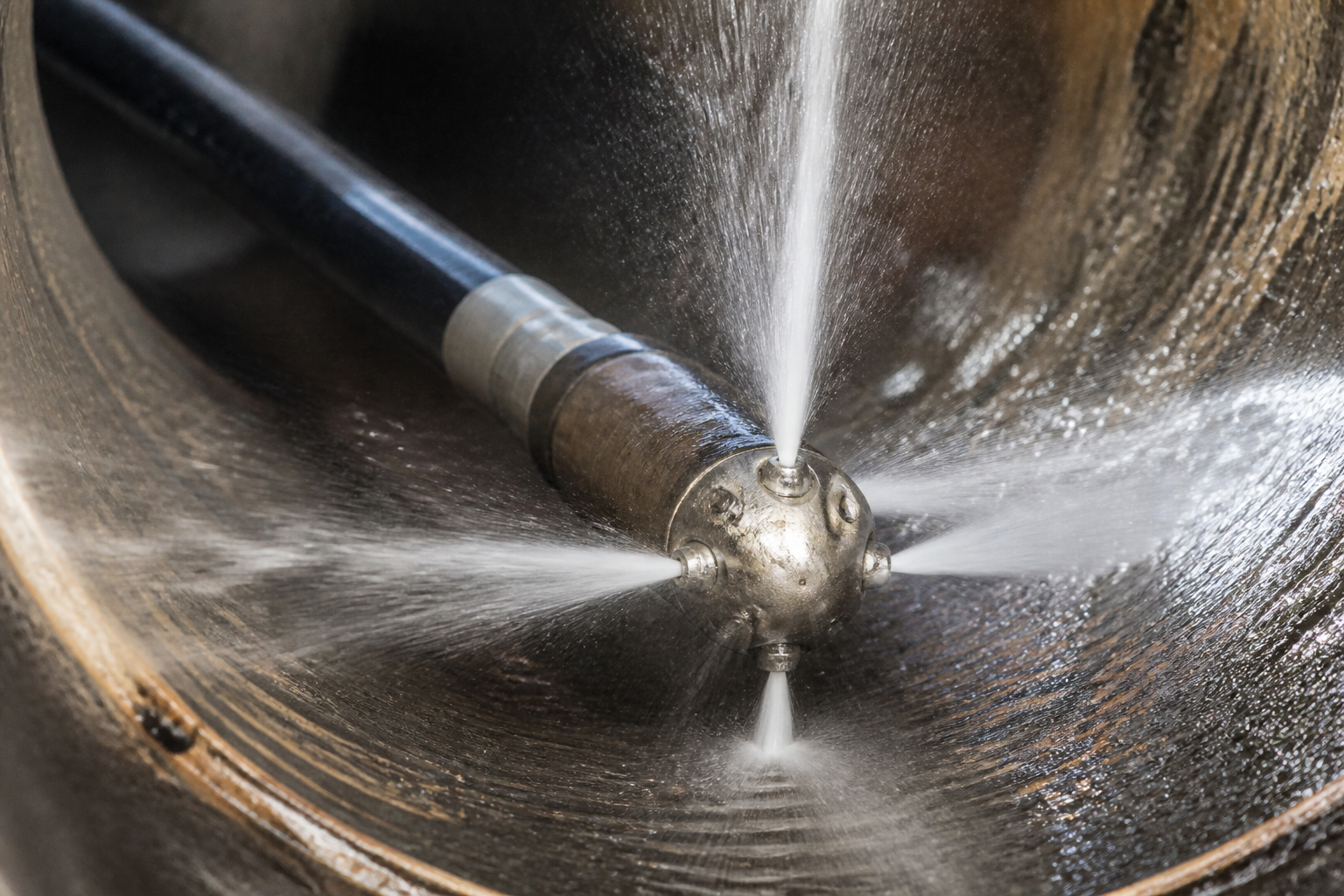
Gilbert's hard water leaves calcium deposits on pipe walls. Combined with cooking grease, these deposits build into a solid mass over years. Hydro jetting removes it; snaking only pokes a hole through.
Pipe Collapse / Crush
Catastrophic failure — usually from Orangeburg that has softened, cast iron with severe corrosion, or PVC hit by soil pressure without proper bedding. Requires immediate repair. Backups come on fast and don't clear.
How We Diagnose the Problem
A sewer line is 4–6 inches wide and runs 5–15 feet underground. You can't guess what's wrong — you need to see it. Here's how we do that.
HD Video Camera Inspection
Standard on every job
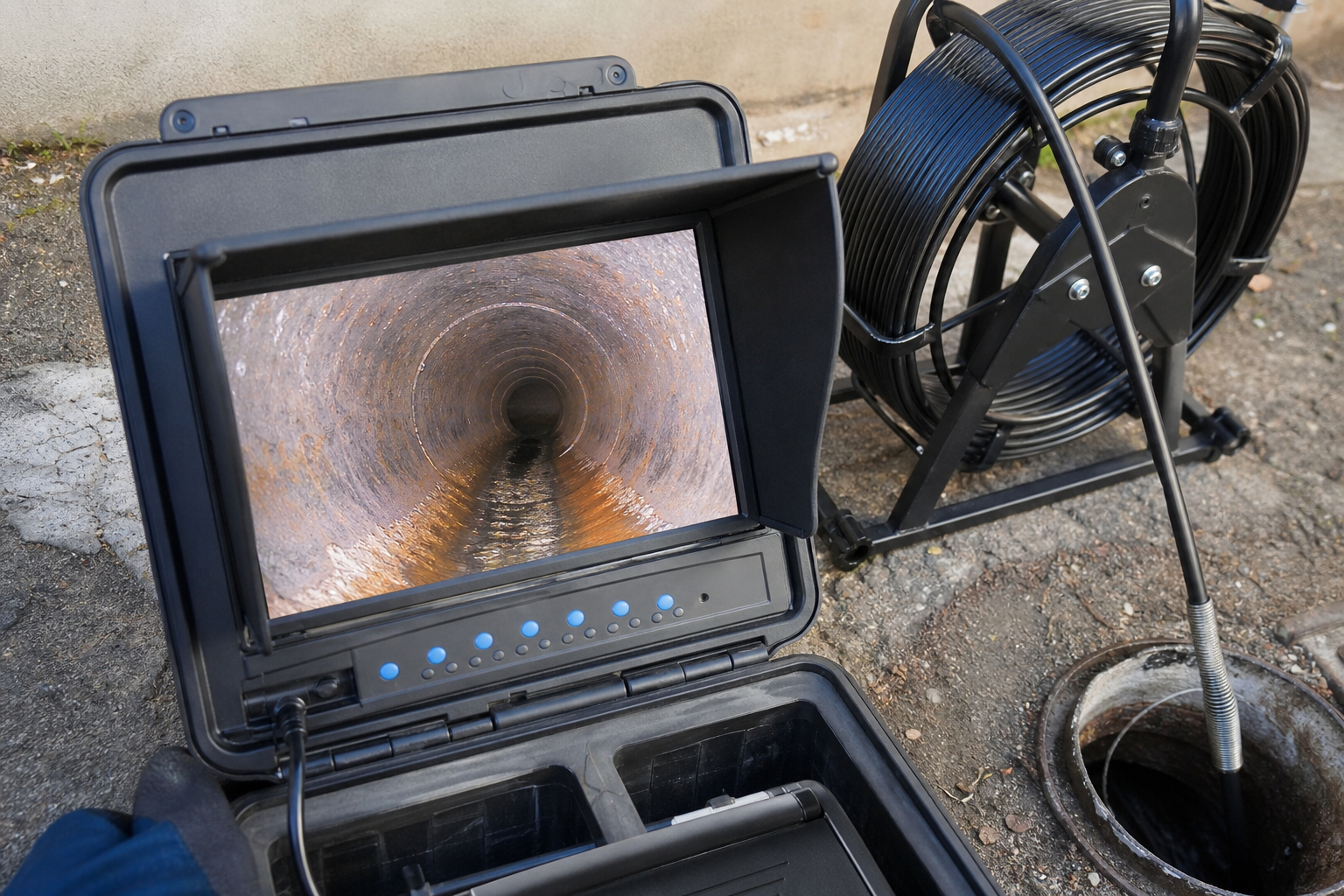
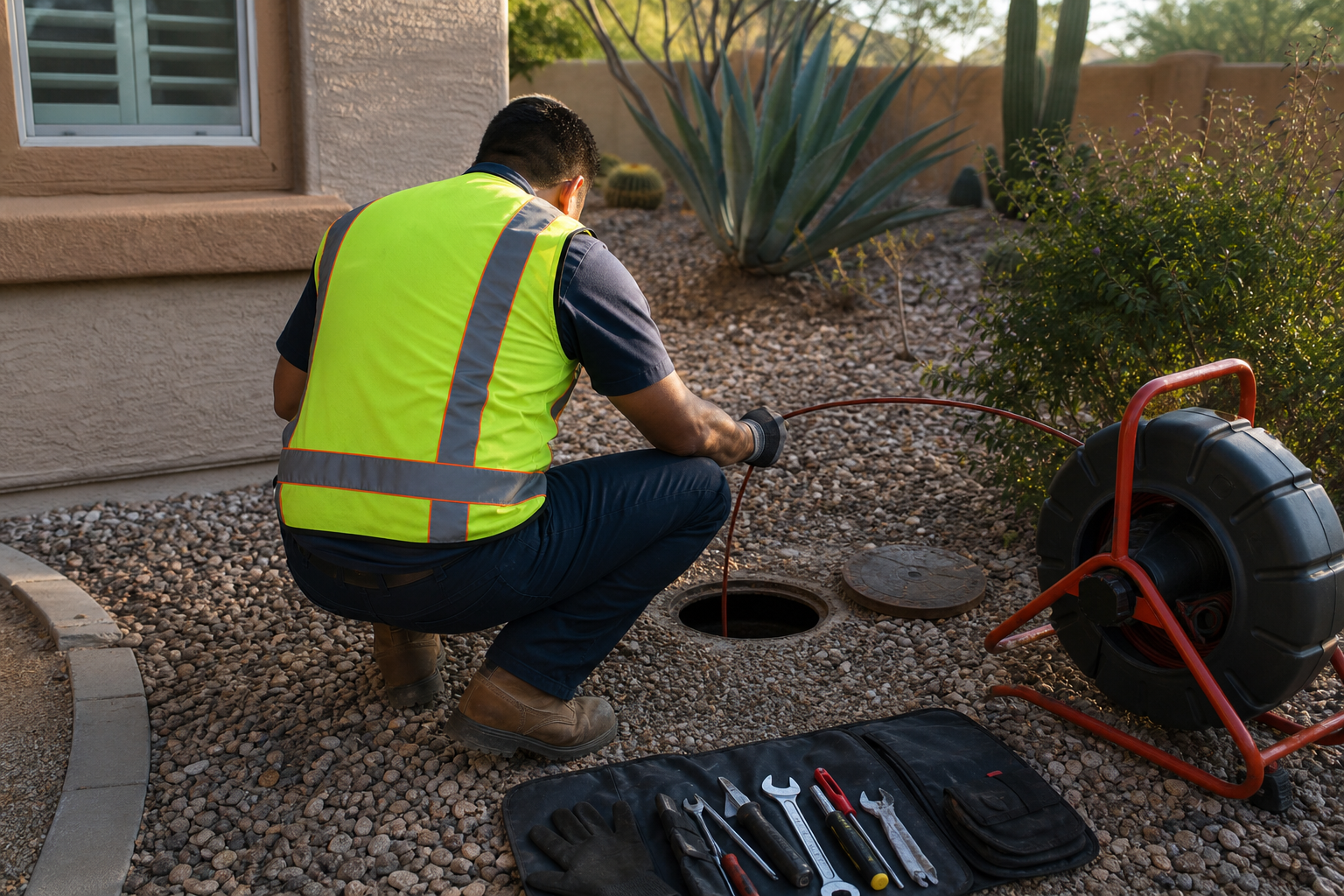
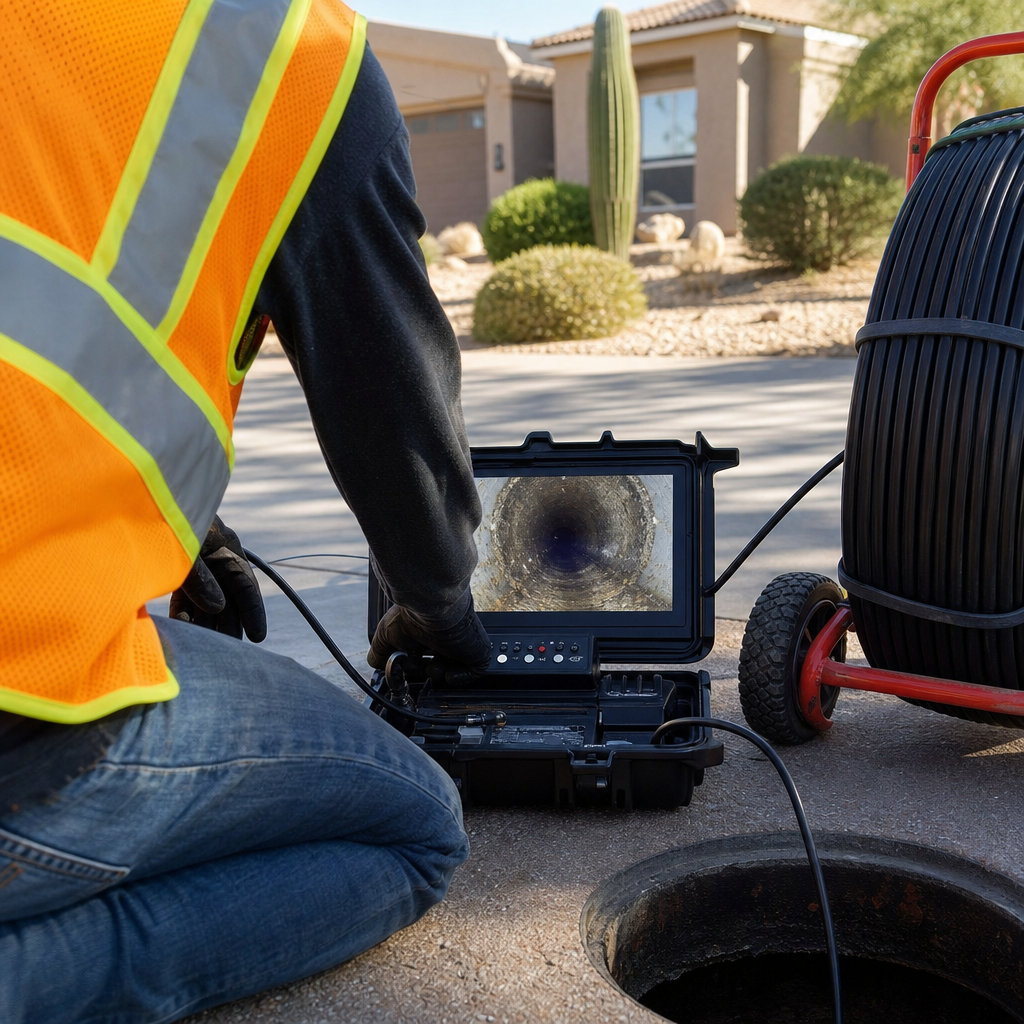
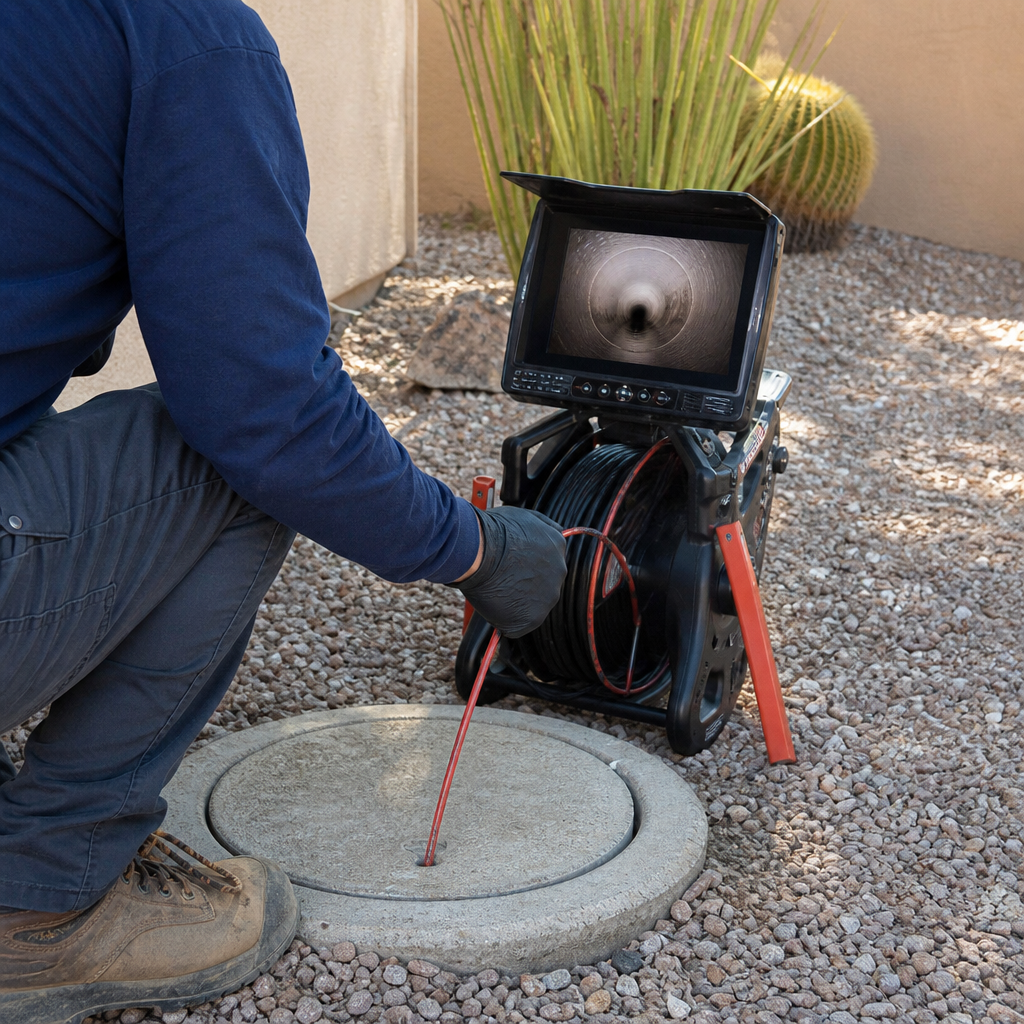
A waterproof camera on a flexible rod with a self-leveling lens is fed through a cleanout or pulled toilet. We can see the full run — material, condition, obstructions, joint alignment, and sag. We record video and note GPS depth at any problem point.
Pipe Locating (Sonde)
To mark dig locations
A transmitter (sonde) in the camera head sends a signal that a surface locator picks up. We mark exactly where the camera is underground, so if we need to dig, we dig once — over the right spot.
Hydrostatic Pressure Test
For leak confirmation
We plug the drain, fill the system with water, and watch for pressure drop. Confirms a leak before we decide on trenchless vs. open-cut. Common on pre-purchase inspections or after a slip-lining repair to verify sealing.
Repair Methods — and When to Use Each
There's no single "best" method. The right choice depends on what we find on camera, the pipe's material and condition, the yard layout, and your budget. Here's an honest breakdown.
CIPP Pipe Lining (Cured-in-Place)
Best for: root intrusion, cracked joints, minor offsetting, general pipe deterioration on pipes in otherwise straight alignment
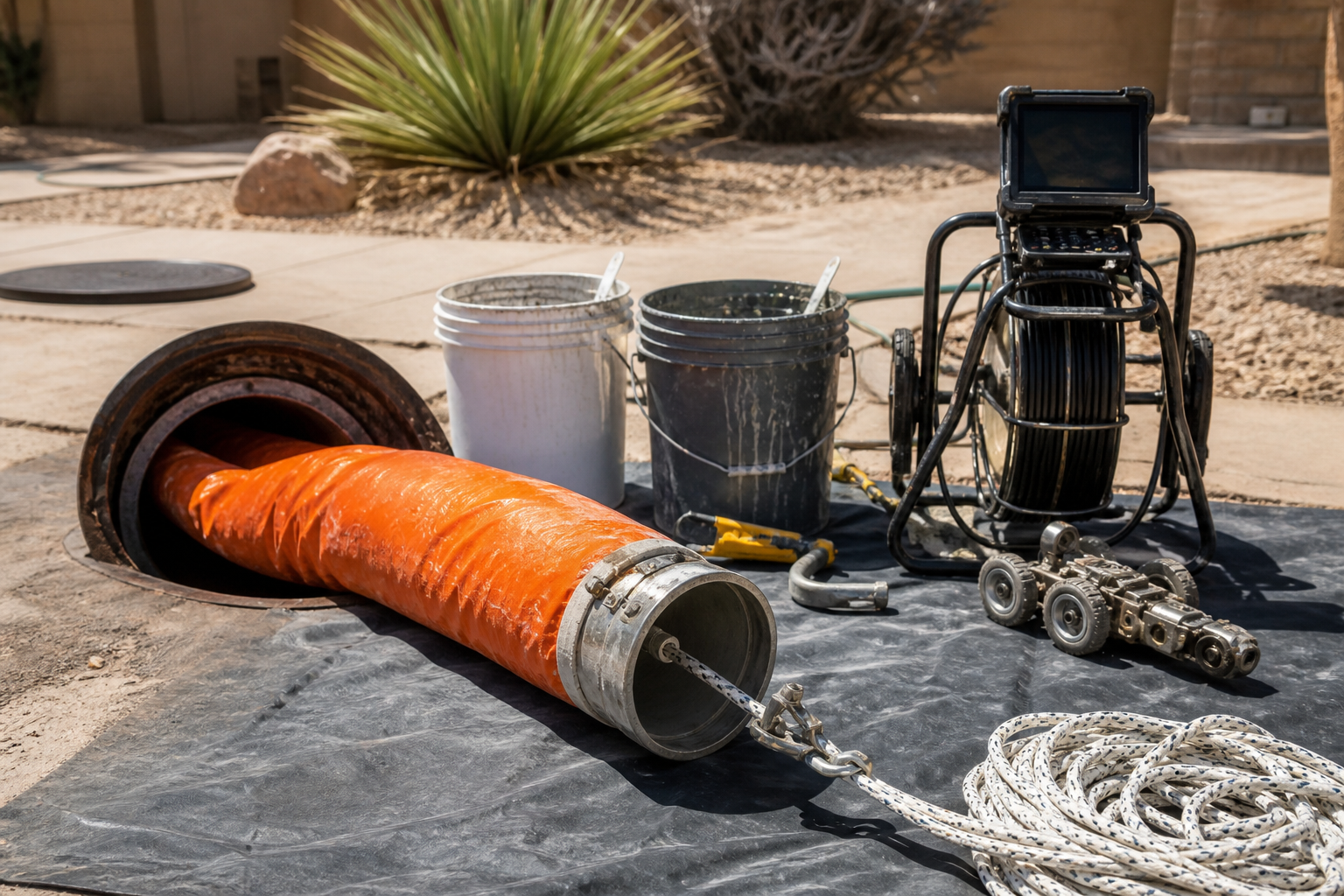
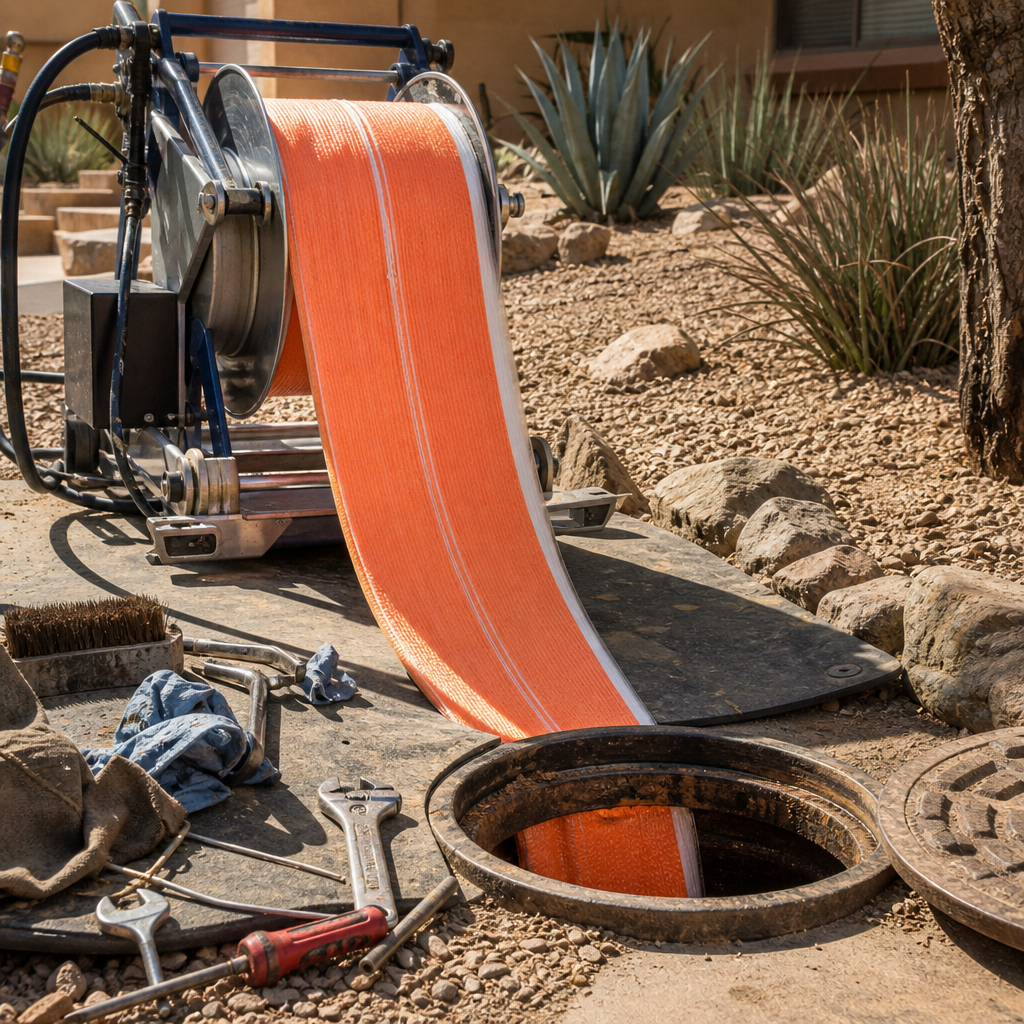
A felt liner saturated with epoxy resin is pulled into the existing pipe and inflated against the walls. UV light or steam cures it into a rigid, jointless pipe-within-a-pipe. The new liner is 4–6mm thick and rated for 50+ years. No digging required beyond accessing a cleanout.
Limitation: Won't work on a fully collapsed section, pipe with more than about 30% offset, or significant bellying (water pooling in a sag will prevent proper curing).
Pipe Bursting
Best for: replacing the full run when the pipe is too deteriorated to line, or when you need to upsize diameter
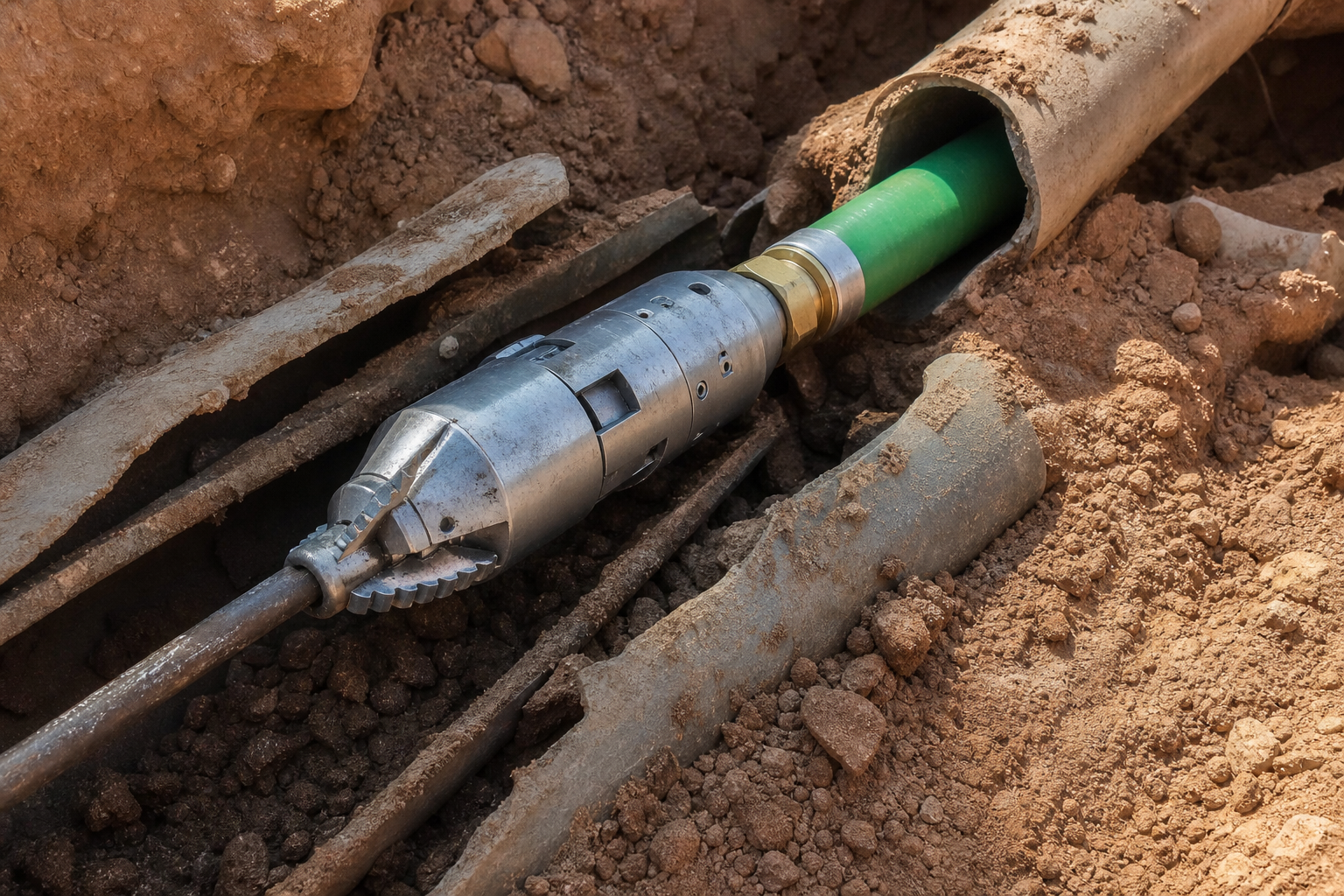
A hydraulic bursting head is pulled through the existing pipe, fracturing it outward into the surrounding soil. A new HDPE pipe follows directly behind it, filling the void left by the burst pipe. No trench needed for the pipe run — access pits at each end only.
Limitation: Can't be used if there are other utilities immediately adjacent or if the pipe makes tight bends. Also requires relatively consistent soil — Gilbert's caliche layers can create resistance.
Spot / Point Repair
Best for: a single isolated offset joint, root intrusion at one cleanout connection, or a pinhole crack in an otherwise healthy line
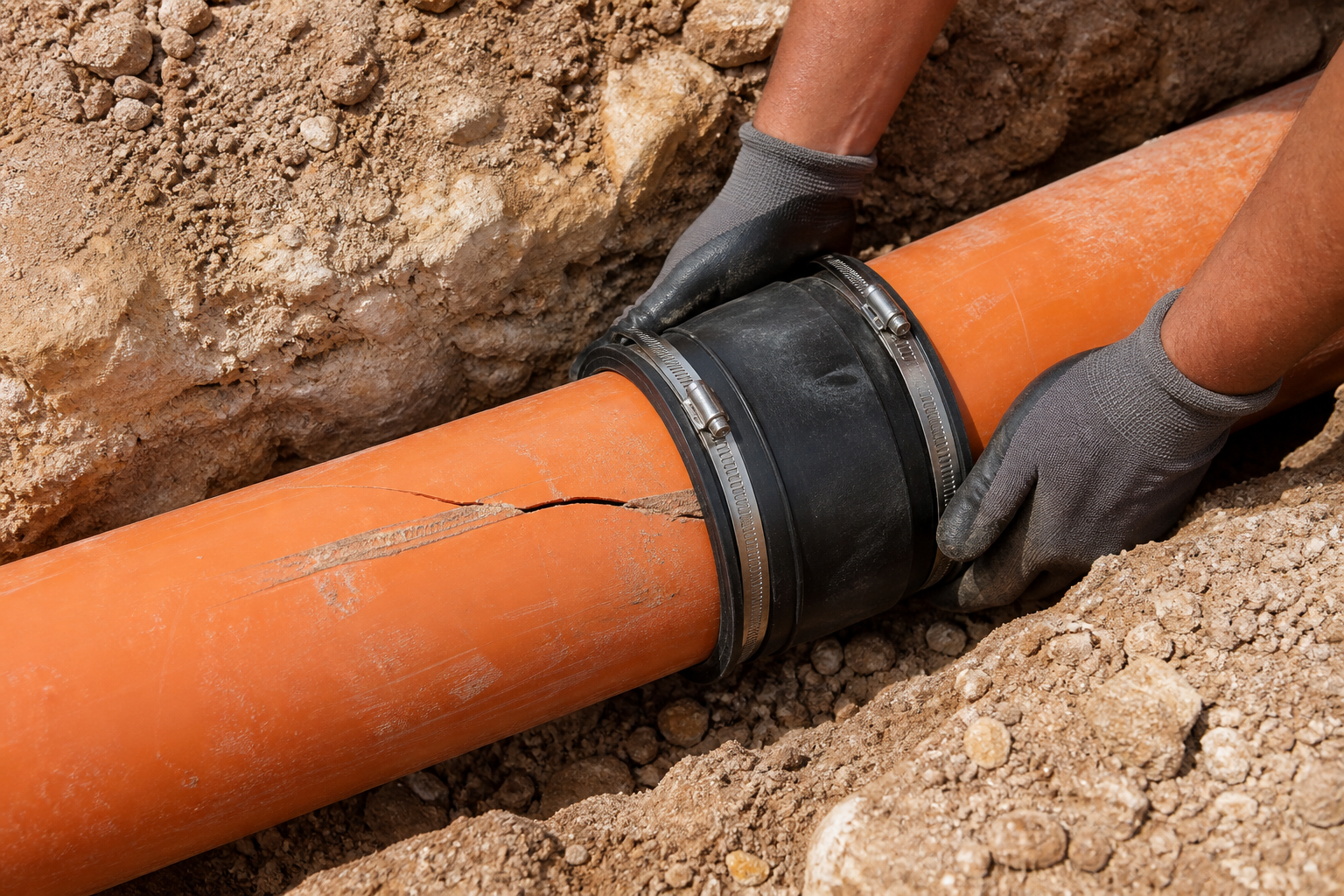
We excavate directly over the problem (using the camera's GPS depth reading), cut out the failed section, and splice in a new section of matching or compatible pipe with mission couplings. Typically a small dig — 3 to 5 feet.
Limitation: If the same pipe has multiple problems spaced out over its run, you're better off lining or replacing the whole thing. Multiple spot repairs on a deteriorated line add up fast.
Open-Cut Full Replacement
Best for: catastrophic collapse, severe bellying, Orangeburg or heavily channeled cast iron, or when the pipe run changes direction or connects to a new structure
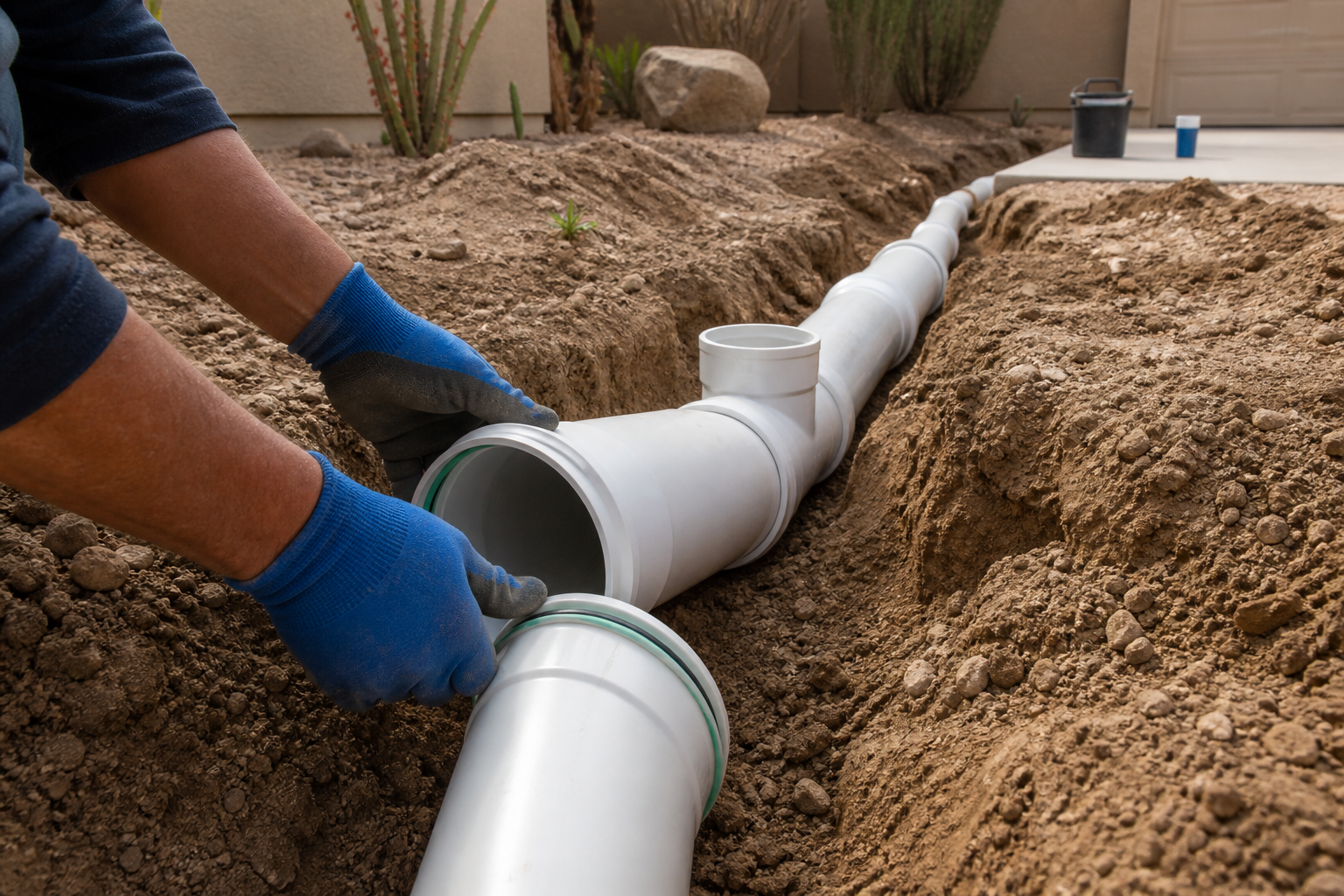
We trench the full run from the building stack to the city connection, remove the old pipe, bed new PVC or ABS pipe on compacted sand, and backfill in lifts. The most invasive method — but sometimes the only one that makes sense on a pipe that's genuinely beyond repair.
Limitation: Damages landscaping, hardscape, and concrete over the pipe run. We haul the spoils and patch concrete, but plan for restoration after.
The honest answer on method selection
We recommend the method that fixes your pipe for the longest time at the fairest cost — not the most expensive one. A 30-year-old PVC line with one root intrusion point doesn't need full replacement. A channeled cast iron line that's failed in three spots does. We show you the camera footage and explain exactly what we found before we recommend anything. You decide.
Questions about your specific pipe? Call (480) 386-6163 — we'll talk through it at no charge.
Warning Signs Your Sewer Line Needs Repair
Sewer line problems rarely announce themselves all at once. Most start small and get worse fast once they do. Catch it early and a spot repair handles it. Ignore it and you're looking at a full replacement.
📞 Call for a Free Camera InspectionMultiple drains backing up at once
If your toilet, tub, and floor drain all back up at the same time, the main sewer line is blocked — not just one fixture.
Sewage smell inside the house
A functioning sewer line is airtight. If you smell rotten egg or sewage odors inside, gas is escaping through a crack or break.
Gurgling sounds from drains or toilets
Gurgling means trapped air — air that has nowhere to go because the line is partially blocked or venting improperly.
Unusually green or wet patches in the yard
A leaking sewer line fertilizes the ground above it. A soft, soggy, or bright-green strip of grass often marks exactly where the break is.
Pests showing up out of nowhere
Rats and insects enter homes through broken sewer pipes. A sudden infestation with no other explanation is often a cracked line.
Consistently slow drains in multiple rooms
One slow drain is a clog. Multiple slow drains across the house points to a main line restriction — roots, grease, or a sag in the pipe.
Sewer line problem in Gilbert?
We answer 24/7 — including nights and weekends. Call now and we'll get someone out fast.